Habits are fascinating things. The more we repeat a behaviour, the stronger that pathway becomes in our brain. It’s a bit like walking through a field. The first time you walk across it, you have to push through tall grass. But if you take the same route every day, eventually you create a well-worn path that’s easy to follow. Our habits work much the same way.
For years, my solution to unwanted habits was simple: try harder. I’d tell myself things like: “Come on, Janet. Just focus.” “Use more willpower.” “Try harder!.” Basically, I approached habit change like a bulldozer charging through a brick wall. Spoiler alert: that strategy didn’t always work.
The truth is that habits aren’t usually defeated by brute force. They’re replaced by creating new pathways that eventually become stronger than the old ones. Think of it this way. If you’ve driven the same route home from work for years, you don’t need to think about every turn. Your brain has automated the process. Habits operate in much the same way. Repetition creates familiarity, and familiarity creates automatic behaviour. So instead of constantly fighting an old habit, what if we focused on building a new one?
Let’s use sugar cravings as an example. Suppose you’ve decided you want to cut back on sugar. The first step isn’t throwing every cookie in the house into witness protection. The first step is figuring out what’s triggering the craving. Is it your morning coffee? Is it the artificial sweetener you’ve been using that keeps your taste buds expecting something sweet? Is it your daily stop at a coffee shop? Maybe it’s that 20-minute “I survived today” break after work that somehow always seems to involve a treat. Once you identify the cue, you can create a replacement habit.
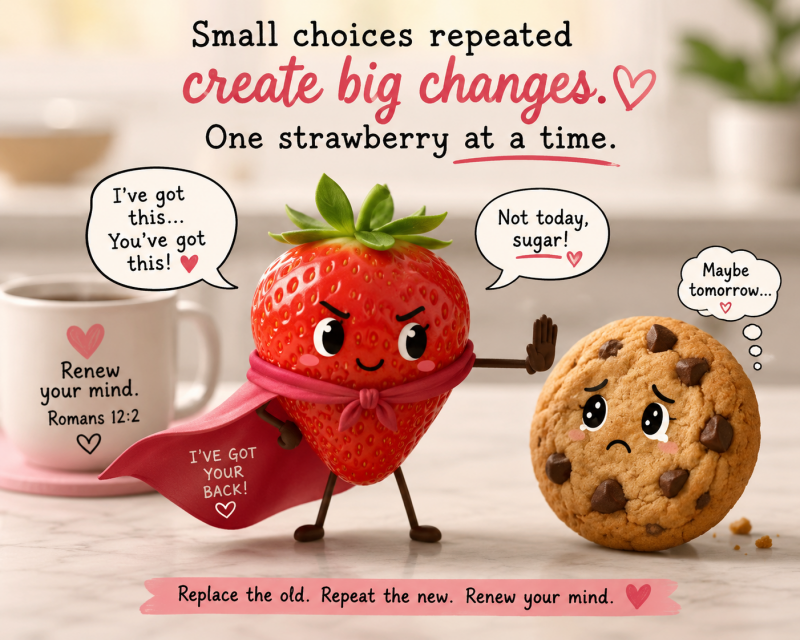
For example: “When I start craving something sweet, I will eat two strawberries.”
It sounds simple, but that’s the point. Each time you repeat the new behaviour, you’re teaching your brain a different response. Over time, the new pathway grows stronger while the old one becomes weaker from lack of use. Will it happen overnight? Of course not. If it did, we’d all have six-pack abs, spotless houses, and vegetables would somehow taste like chocolate cake. But repetition works.
Small choices repeated consistently have a way of creating big changes. As Christians, this idea isn’t new. Romans 12:2 reminds us: “Be transformed by the renewing of your mind.” Renewing our minds isn’t usually a one-time event. It’s a daily process of choosing new thoughts, new actions, and new patterns until they become part of who we are.
So the next time you’re tempted to attack a habit with sheer willpower, consider a different approach. Don’t just try harderBuild a new path
One small step.
One repeated choice.
One strawberry at a time.
And if you accidentally eat the cookie? Don’t panic. Tomorrow is another opportunity to strengthen the pathway you actually want to follow. After all, progress is built on repetition, not perfection. Don't forget to check in next week to learn more about Habits.