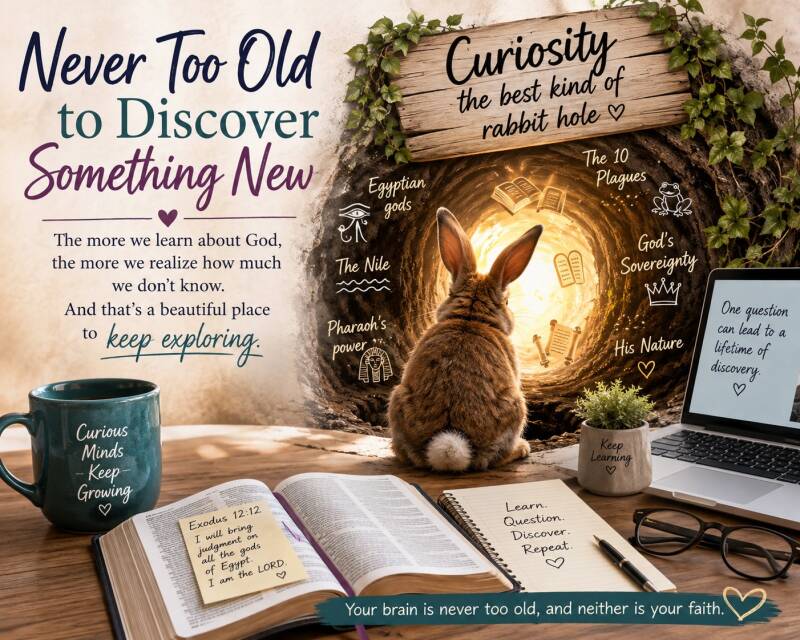
I learned something this week that genuinely surprised me I’ve known the story of Moses and the ten plagues for most of my life. I’ve read it. I’ve heard it preached. I’ve watched enough versions of Moses parting the Red Sea that you would think I had the story pretty well covered. Apparently not. 😂 While studying the nature of God, I learned about the connection between the ten plagues and the gods worshipped in ancient Egypt. Wait… what? How had I never heard this before? The plagues weren’t simply a collection of increasingly unpleasant disasters designed to convince Pharaoh to let the Israelites go. There was a much bigger message being communicated. Throughout Exodus, God was revealing who He was. Egypt had many gods and goddesses associated with different aspects of nature and life. The Nile, the sun, fertility, crops, animals and even Pharaoh himself were connected to Egyptian religious beliefs. While scholars differ on whether every individual plague can be matched precisely with one particular Egyptian deity, the overall message of the Exodus account is unmistakable. The God of Israel was demonstrating that He, not Egypt’s gods, not Pharaoh, not nature, was sovereign. In Exodus 12:12, God says: “I will bring judgment on all the gods of Egypt. I am the LORD.” Suddenly, a Bible story I had known for decades had another layer. And I loved it. Not only because I was learning more about God, but because it reminded me of something else I believe we sometimes forget as we get older: There is always more to learn.
Somewhere along the way, adulthood can become very repetitive. We develop routines. We know how we like our coffee. We have our favourite foods, favourite shows, favourite ways of doing things, and heaven help the person who reorganizes the kitchen cupboards without consulting us first. 😝 There is comfort in familiarity. But our brains also benefit from something different: challenge, curiosity and novelty. Learning something new requires the brain to pay attention, process information, make connections and retrieve what we’ve learned. The brain remains capable of changing and adapting throughout life; a process known as neuroplasticity. In other words, our brains aren’t simply finished developing and destined to sit quietly on the shelf once we reach a certain age. Thank goodness.
When we learn a new skill, study an unfamiliar subject, solve problems, read, play an instrument, learn a language or dig deeper into something we thought we already understood, we’re giving our brains something to work with. And that doesn’t mean we all need to enrol in university at 70. Learning can happen anywhere. It might mean figuring out a new piece of technology without throwing it across the room. It might mean learning to knit, paint, garden or play an instrument. It could be researching your family history, trying a new recipe, taking a course, reading about a subject you’ve always wondered about or studying a familiar passage of Scripture from a completely different perspective. The subject isn’t necessarily the important part. Remaining curious is. “I Already Know That Story” That’s what struck me most while studying the plagues. I thought I knew the story. Moses goes to Pharaoh. “Let my people go.” Pharaoh refuses. Plagues happen. Pharaoh changes his mind. Then changes it back. Eventually Israel leaves Egypt. Red Sea. Dry land. Pharaoh’s army. You know the rest. Except apparently, I didn’t know all of it. And isn’t that true of so many things?
Sometimes familiarity convinces us there is nothing left to discover. We can do that with Scripture. We can do it with other people. We can even do it with ourselves. “I already know that.” “I could never learn that.” “I’m too old to start that.” “I’m just not good at those things.” But curiosity asks a different question: What don’t I know yet? That tiny word, yet, can open an enormous door.
There is something energizing about discovery. You know the feeling when you learn something fascinating and immediately want to tell someone? “Did you KNOW…?” Suddenly you’re researching one thing, which leads to another thing, which leads to another, and three hours later you have seventeen browser tabs open and no memory of what you originally went looking for. 😂 But your mind is engaged. You’re thinking. You’re questioning. You’re making connections. You’re participating in life rather than simply repeating yesterday.
And I think there is something wonderfully biblical about curiosity. The more I learn about God, the more I realize how much I don’t know. Romans 11:33 says: “Oh, the depth of the riches of the wisdom and knowledge of God!” Depth. Not a shallow puddle we understand completely after a few Bible studies. Depth means there is more. More to discover. More to understand. More to appreciate.
Getting older brings experience, and experience is valuable. But experience shouldn’t convince us that we’ve graduated from learning. Perhaps one of the healthiest things we can say at any age is: “I didn’t know that. Tell me more.” There is no embarrassment in discovering something at 60 that someone else learned at 20. You know it now. That’s what matters. So this week, find something that makes you curious. Open the book. Take the course. Research the question. Try the hobby. Study the Scripture you’ve read a hundred times and ask God to show you something you’ve overlooked. Give your brain something new to wrestle with. Because learning isn’t only about collecting information. It keeps us curious. It keeps us growing. It reminds us that there are still discoveries waiting for us. And sometimes one of those discoveries begins with a story you thought you already knew. ❤️